Selected Projects
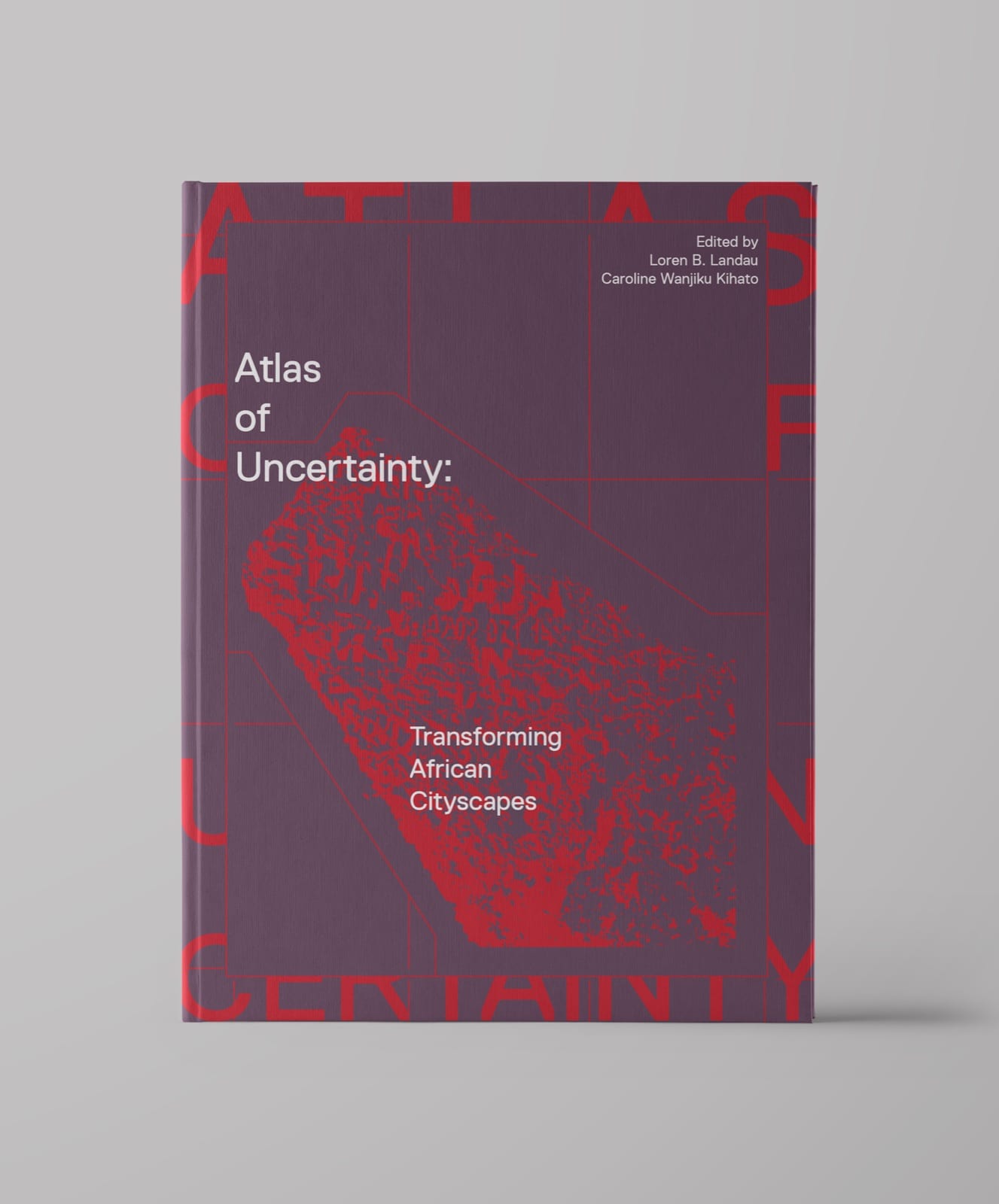
Project: Atlas of Uncertainty
Role: Head of Communications
Project Summary: In the first two decades of this century, Africa’s urban population grew by 469 million. By 2050, the continent’s cities are expected to hold 1.4 billion people. It is where the future is being made. Yet the language used to describe these spaces — failure, disorder, ungoverned, problematic — arrives already tired.
A book, traveling exhibition and interactive data, the Atlas of Uncertainty asks: What if African cities aren’t behind the curve, but ahead of it?
This collaborative transdisciplinary knowledge production project, which includes over 60 scholars, artists and writers, challenges how we understand and interpret migration and African cities.
Built on surveys from gateway neighbourhoods in Accra, Nairobi, and Johannesburg, the Atlas moves from the census to the senses. Here, essays, maps, survey data, visualisations, new forms of cartography, and artworks are companion forms of inquiry. What emerges is not a single map, but different orientations.
Organizations: Wits/Oxford Mobility Governance Lab, African Centre for Migration & Society, Frame45, Mellon Foundation
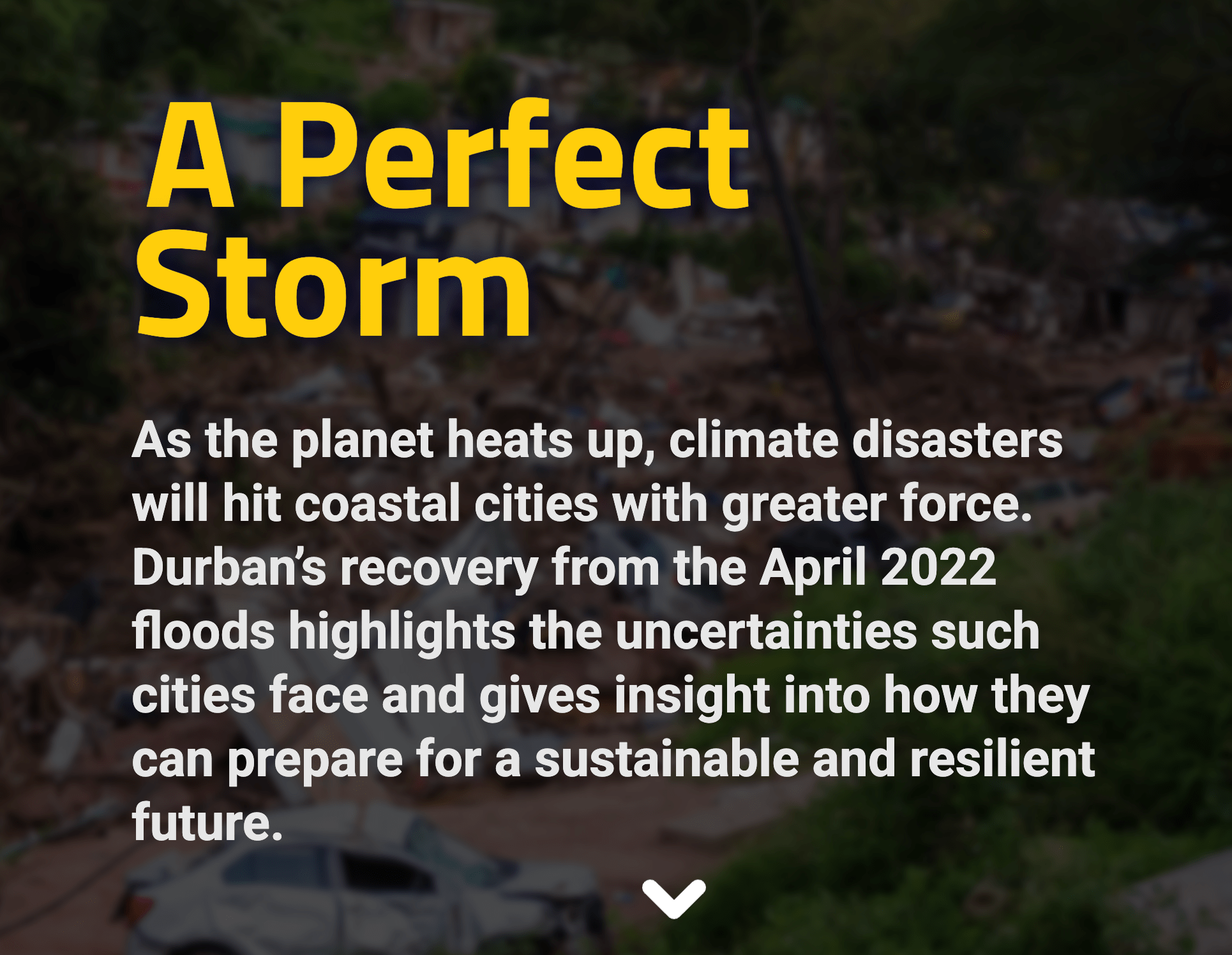
Project: A Perfect Storm
Role: Editor and Project Manager
Project Summary: By the time President Cyril Ramaphosa called a state of emergency on April 19, 2022, at least 435 people were dead, and 54 were missing in the massive storm that slammed the city of Durban. Thousands lost their homes and businesses. Roads and bridges were torn away, communications knocked out, sewerage works gutted, and power grids destroyed. The initial damage was estimated at R17-billion, although the final bill might run even higher than R25-billion.
The devastating climate event — the most catastrophic storm to hit South Africa in recorded history — was well documented by local and international news.
In a reflection on the storm a year later, Media Hack Collective’s The Outlier publication produced A Perfect Storm to look beyond the event itself. We wanted to know what could be done to mitigate some of the damage from future climate events, which will continue to increase as the planet heats up.
The project included a deep dive story, including explainers, data analysis and visualisation, and a resource guide for African journalists interested in reporting about coastal resilience in their communities.
Organizations: The Outlier, Daily Maverick

Project: One Night in Snake Park
Role: Creator and Executive Editor
Project Summary: In 2015, 14-year-old Siphiwe Mahori was killed in Snake Park, Soweto, by a foreign shopkeeper. His death made international headlines and sparked renewed xenophobic violence across South Africa’s black townships. But by the end of that year, his name was all but forgotten.
In this six-part serial podcast, journalist Tanya Pampalone, researcher Eliot Moleba and radio journalist Rasmus Bitsch return to Snake Park to find what really happened that day. Each 30-minute episode unravels how the death of Siphiwe Mahori speaks to issues of migration, systemic xenophobia, Afrophobia, the failure of justice and the value of black lives in contemporary South Africa.
Organizations: Henry Nxumalo Foundation, Sound Africa, Daily Maverick

Project: I Want to Go Home Forever
Role: Co-editor
Project Summary: Generations of people from across Africa, Europe, and Asia have turned metal from the ground into Africa’s wealthiest, most dynamic and most diverse urban centre, a mega-city where post-apartheid South Africa is being made. Yet as newcomers and long-term residents seek a place to make their home, they find Gauteng’s promises and possibilities tinged with dangers.
I Want to Go Home Forever tells the stories of those communities, of South Africans striving to realise the promises of democracy.
Told in their own words, this collection alternates between South Africans’ and foreigners’ stories. The narratives, collected by researchers, journalists and writers, reflect the many facets of South Africa’s post-apartheid decades. Taken together, they speak of the emotions and relations emanating from the space between outrage and hope, violence and solidarity, the making of selves and the other, and of how people’s pasts and intersections are shaping South Africa. Underlying them all is a nostalgia for an imagined future that will never be realized. These are stories of forever seeking a place called home.
Organisations: Wits Press
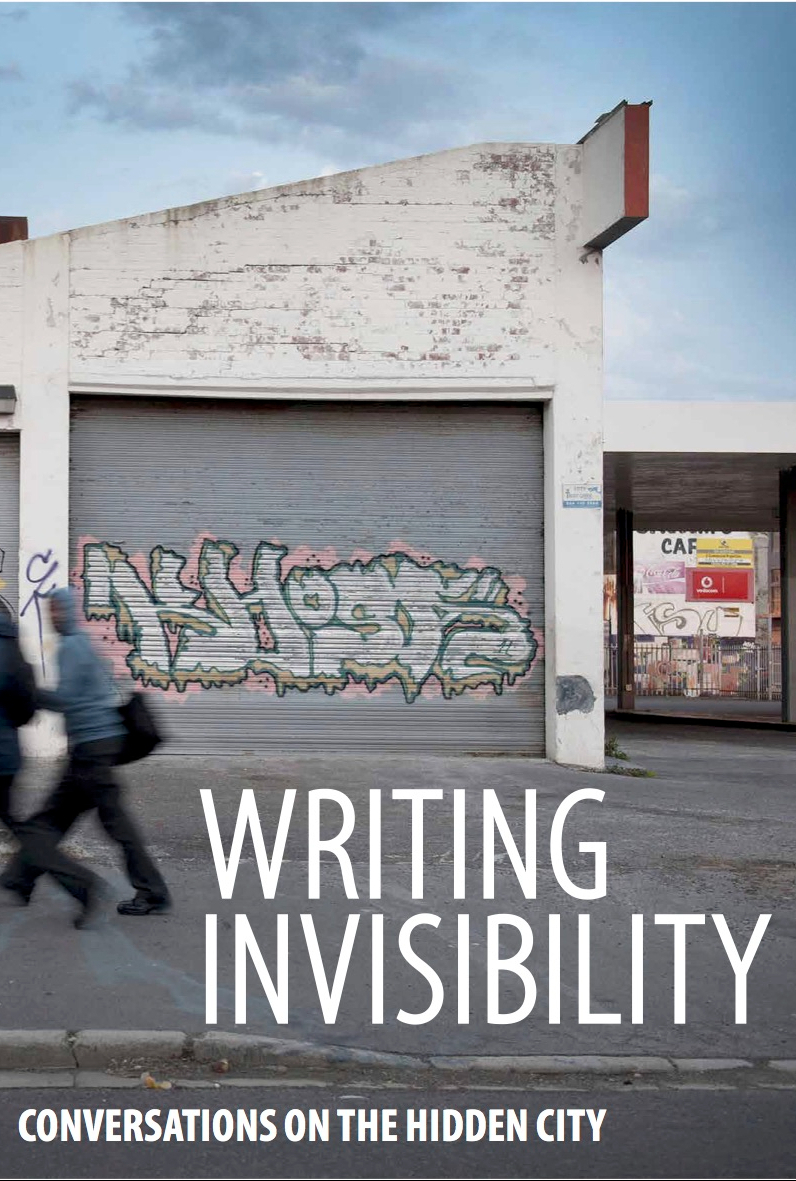
Project: Writing Invisibility: Conversations on the Hidden City
Role: Co-editor and Project Manager
Project Summary: Linking narrative non-fiction and the social sciences, “Writing Invisibility: Conversations on the Hidden City” is a journey into the spaces of the city often bypassed in public debate and public story-telling: the ship, the slum, the wall, the market-place, the church, the mine, the rooms of sex workers, and even the rural areas, which remain a part of urban life.
A team of leading writers and journalists from South Africa, Nigeria, Uganda, Kenya and the US have contributed to stories drawing on themes within social science research, with eight migration academics giving critical responses to the pieces.
The narratives cover a range of topics: immigrant African sex workers in Belgium, patterns of urban survival among Tanzanians in Point Area in Durban, the story of a book seller in Nairobi’s Kibera slum, urban prophecy among immigrants in Johannesburg, how immigrants turned an empty square into a vibrant flea market, how marginal residents of Cape Town resist social control through graffiti, the lives of Cape Town dock workers, and the aftermath of the mine worker massacres in Marikana.
Organizations: Mail & Guardian, Africa Centre for Migration & Society, Max Planck Institute
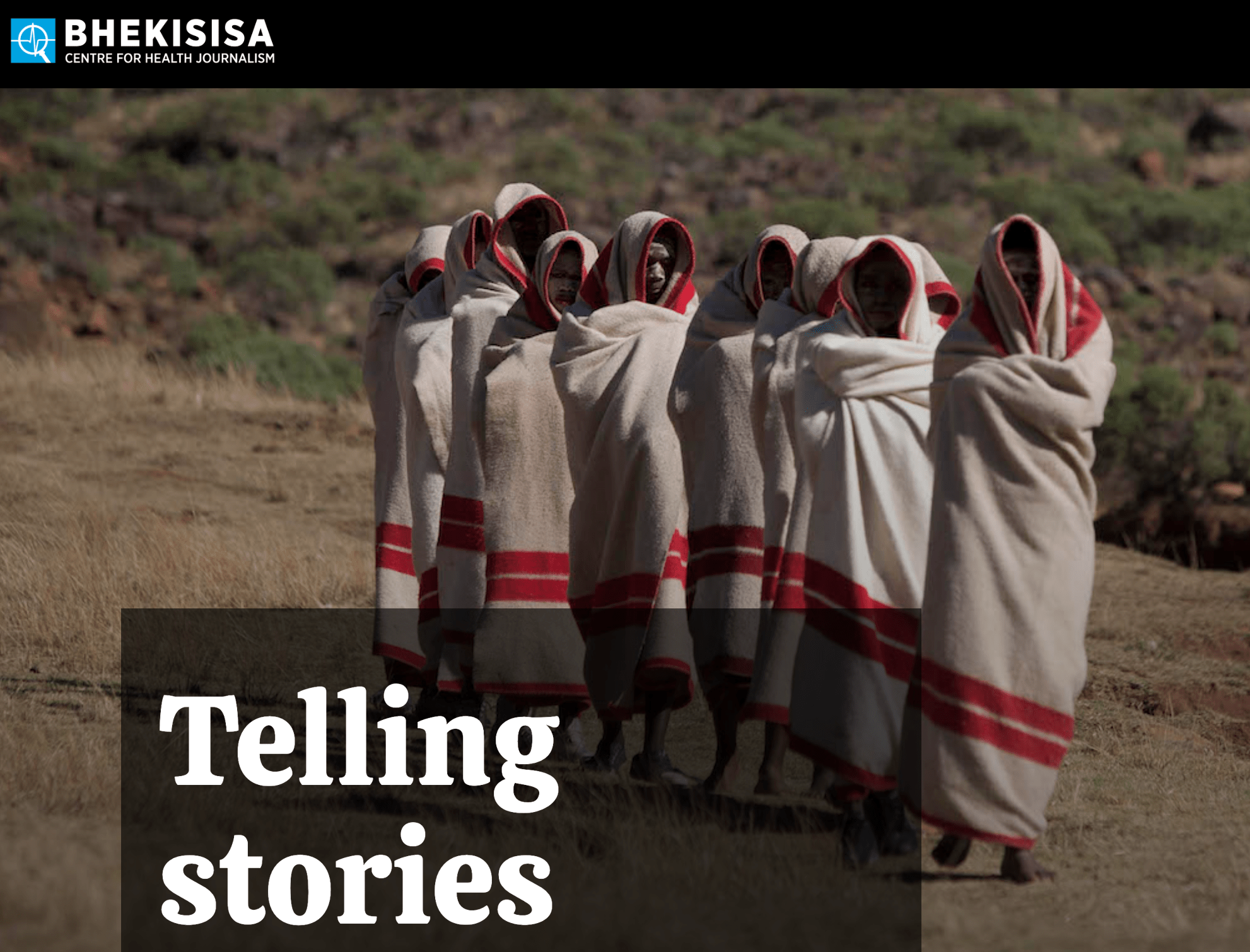
Project: 10 Years of Bhekisisa
Role: Editor and Project Manager
Project Summary: As part of my early work with the Bhekisisa Centre for Health Journalism, one of the leading public health media groups on the African continent, I designed, wrote and edited its climate and health newsletter series, annual reports and a 10 Year Anniversary website.
Organization: Bhekisisa Centre for Health Journalism, Gates Foundation

